If you are trying to figure out how to catch up on laundry quickly, skip the plan to conquer every hamper. Find the step where the cycle has stalled, give it 10 minutes, and stop when the timer rings.
The snag may be an empty washer while dirty clothes collect in bedrooms. It may be a clean load taking over the bed, or folded clothes waiting beside a dresser. The biggest pile is not always the job that will get laundry moving again.
Find today's laundry bottleneck
Set a timer for 10 minutes before you touch the pile. Scan the laundry cycle in order and notice the first line that fits:
-
Dirty clothes are scattered across several rooms.
-
One useful load is ready to wash.
-
Clean clothes are waiting to be folded.
-
Folded clothes are waiting to be put away.
-
Socks, hangers, hampers, or supplies are holding up the next load.
Pick one line. That is today's rescue, not the beginning of an unplanned laundry marathon.
Work on the stage that is stuck. Starting the washer will not help much if the dryer is full and every basket holds clean clothes. Folding or putting those clothes away frees the equipment and baskets for the loads behind them. When several stages are jammed, begin near the end of the cycle and make room for the next one.
Gather laundry from one room
Take an empty basket or hamper into one room and collect only the washable items from that space. Check the usual landing spots, including the floor, chair, and back of the door. Bring the basket to the laundry area, then stop.
There is no need to tour the house for one last sock. One room gives the task a firm edge. Another room can wait for the next 10-minute block, or you can use that block to move the basket you just gathered into the washer.
Keep this round focused on gathering. Pockets, stain checks, and sorting can wait until the basket reaches the washer. Otherwise, a quick trip through one room can quietly collect several new jobs.
Start the load your household needs next
Choose the load that solves the most immediate problem. That may be work clothes, school uniforms, underwear, towels, or the bedding needed tonight. The priority load is the one your household will miss first, even if another pile is bigger.
Before washing, check garment care labels and group items that need compatible cycles and temperatures. The American Cleaning Institute's laundry basics recommends sorting by color, fabric type, and washing instructions, then using the appropriate washer and dryer settings.
Start that load. If you will not be nearby when it finishes, set a reminder to move it. Leave the other baskets alone for now.
Fold one category from the clean pile
A mixed basket asks you to make a new decision for almost every piece. Pull out one category instead. Fold only towels, shirts, pajamas, or children's clothes until the timer rings.
A finished stack also has one obvious destination. Put away the towels if time remains, but do not let a quick fold turn into a dresser overhaul. The rest of the basket can stay put until another short session.
Put away one person's clothes
When folded stacks are the hold-up, choose one person's clothes and return them to their drawers, closet, or shelf. If you live alone, choose one destination, such as the dresser or bedroom closet.
This clears a basket and gets those clothes back into use. Skip the temptation to reorganize every drawer along the way. If the clothes fit and the drawer closes, you have finished this round.
Give socks or hangers their own turn
Small loose items can clog the works. Match the socks with obvious partners and place unmatched socks in one small container. Stop searching when the timer rings.
On a different day, collect empty hangers from closets and return them to the laundry area. Shirts can go straight onto hangers when they leave the dryer instead of waiting for supplies. Choose socks or hangers today, not both.
Clear space for the next load
Sometimes clothing is not the problem. An overflowing hamper, an empty detergent bottle, or a washer covered with supplies can stop the routine before it begins.
Empty one hamper by moving its contents to the correct sorting spot. Clear the top of the washer. Return detergent and stain supplies to the place where you use them, then add anything low to the shopping list. Keep products in their original containers and follow the label directions.
Use the cleared surface for the basket that is moving through the cycle now. Extra supplies can live nearby, but they should not make you clear a landing spot every time you wash a load.
If your rescue includes a dryer load, clean the lint filter. ENERGY STAR's laundry best practices says cleaning it after every load improves airflow and dryer efficiency and is an important safety measure.
Let 10 minutes be enough
When the timer rings, finish the item already in your hands, put the supplies back, and stop. A 10-minute laundry rescue counts when it moves one bottleneck. Full baskets can still be waiting.
Later, choose the next stuck step rather than automatically repeating the same task. If laundry causes trouble in the morning, add one useful move to your 10-minute closing shift, such as washing the clothes needed tomorrow.
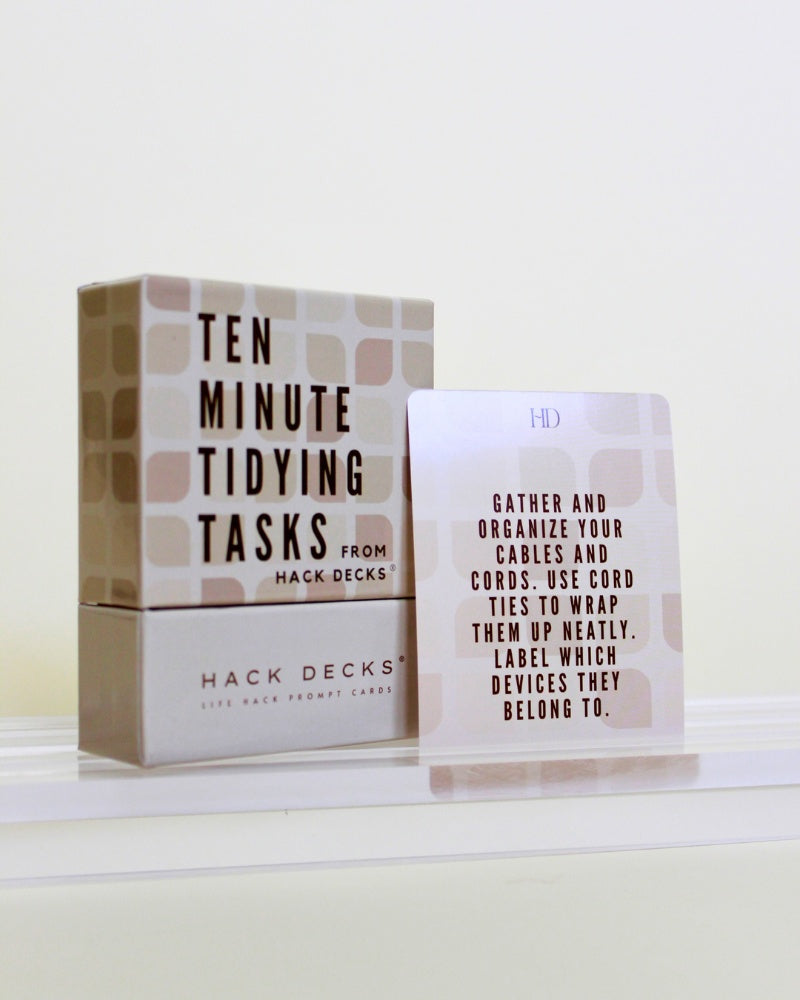
When choosing the next small job takes more energy than doing it, pull one prompt from Ten Minute Tidying Tasks™. Set the timer, complete that prompt, and call the round done.